Organos, Peru: A Complete Guide to the Beach Town Nobody Is Talking About (Yet)
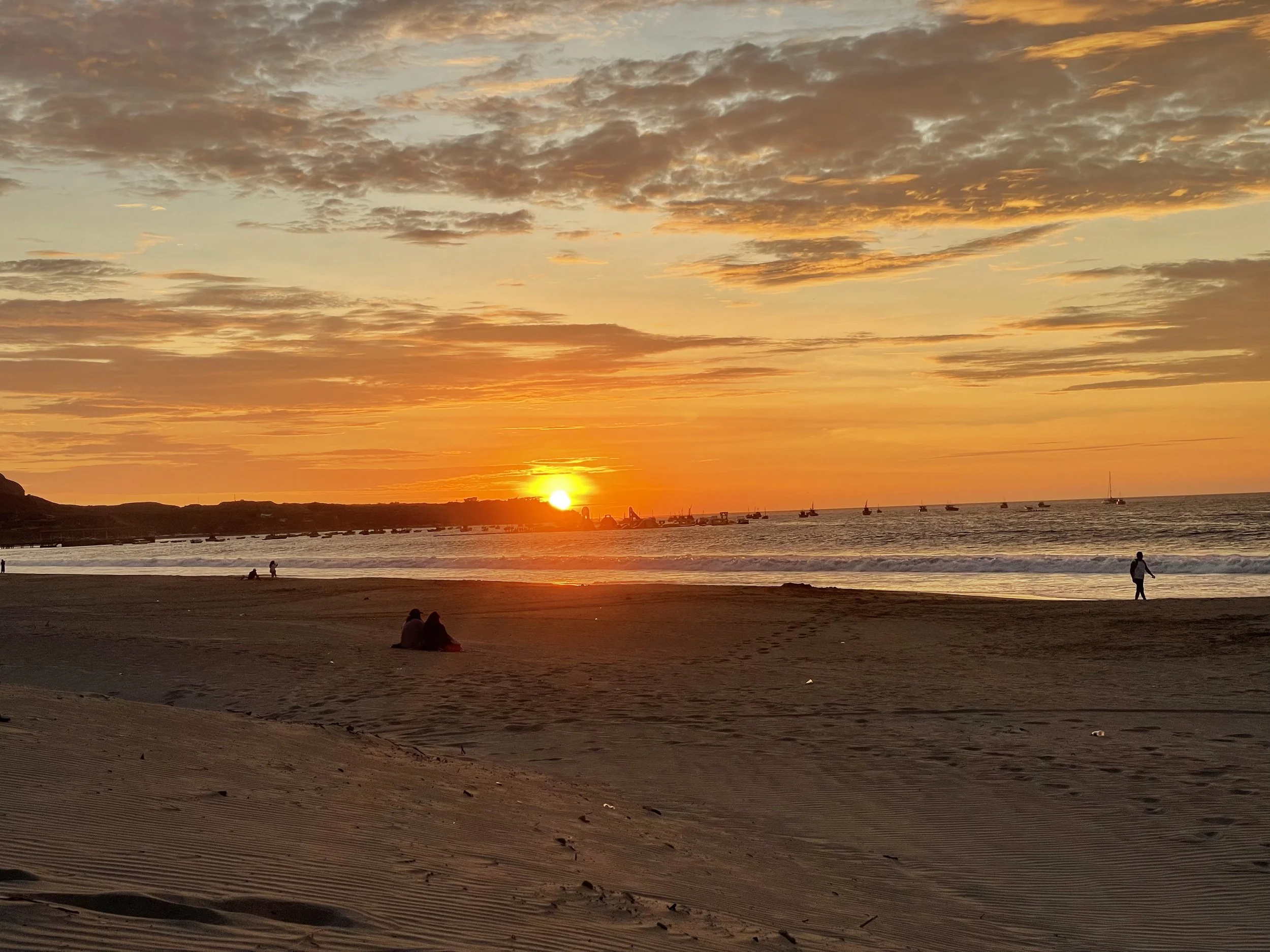
A twenty minute drive from the famous backpacking destination, Mancora, is a beach town that has (undeservedly) escaped attention. Organos is a beach town, almost unknown outside of Peru. An active fishing town, tourism has only recently started trickling down here, and coming here means you get a very local experience, incredible seafood, and some lovely beaches and weather reminiscent of Southern California.
Organos is still on the rustic side, so don’t expect California cleanliness. There is some trash on the beach from the fishermen and from locals who come to hang out at the beach; stray dogs roam around, and the streets are dusty. That all said, it still has a lot to offer!
Getting Around
You can fly into either the Tumbes or Talara airport. I recommend pre-booking your taxi as the best way to get to the beach. I asked my hotel for a taxi recommendation; they booked one for me and sent his information over on WhatsApp. It was 130 soles from Talara airport, but if I had flown into Tumbes, it would have been cheaper, as that airport is a bit closer.
It was about a ten-minute walk to the Plaza de Armas and the pier, or you can take a moto taxi in town to be anywhere in under five minutes for 3-5 soles.
I recommend that if you’re staying at a hotel, you ask for their recommended moto driver to get a better deal and have someone you can call as you move around. I mostly walked around, and while it’s not the prettiest town to walk around, it’s very safe.
Where to Stay
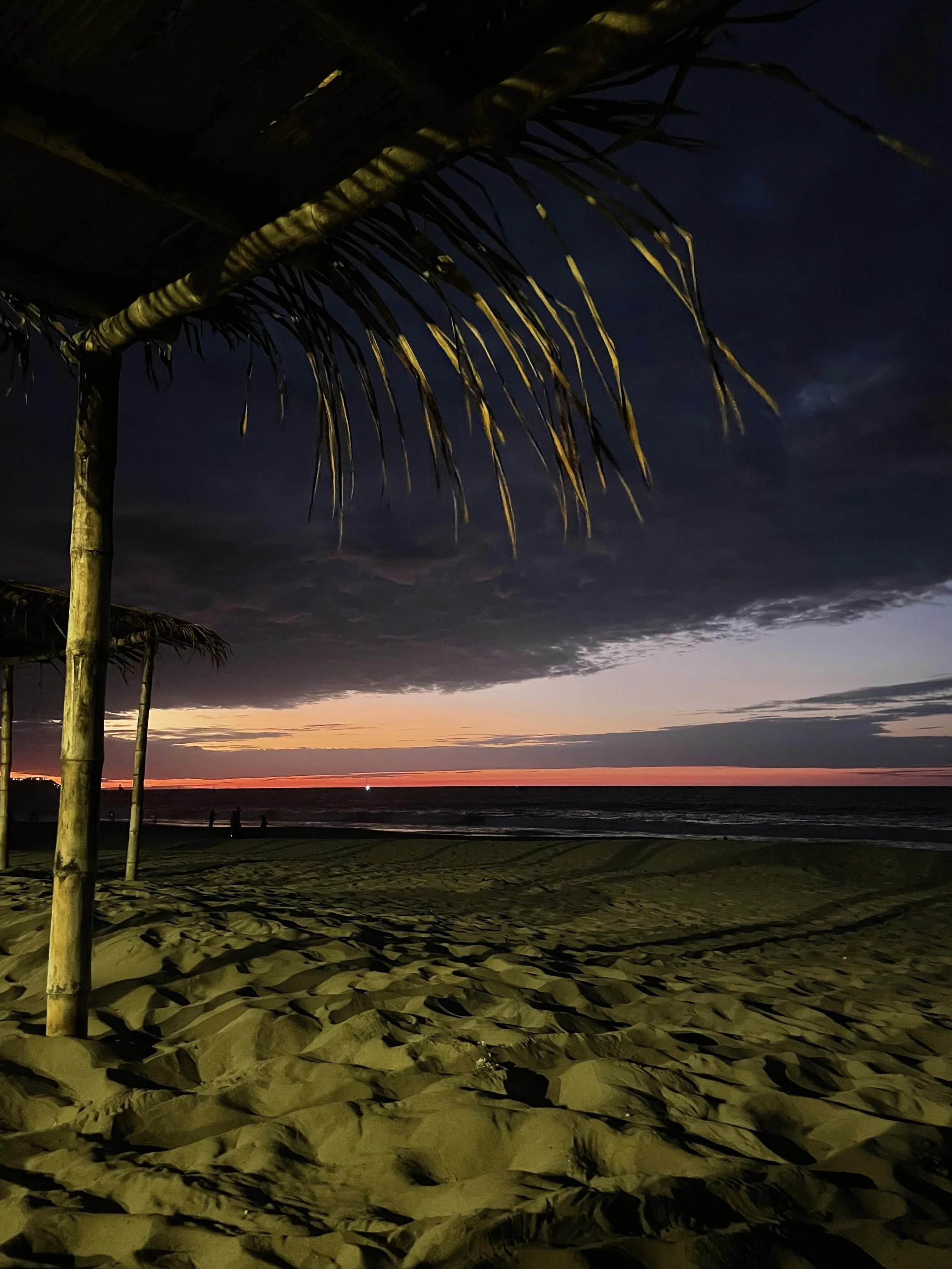
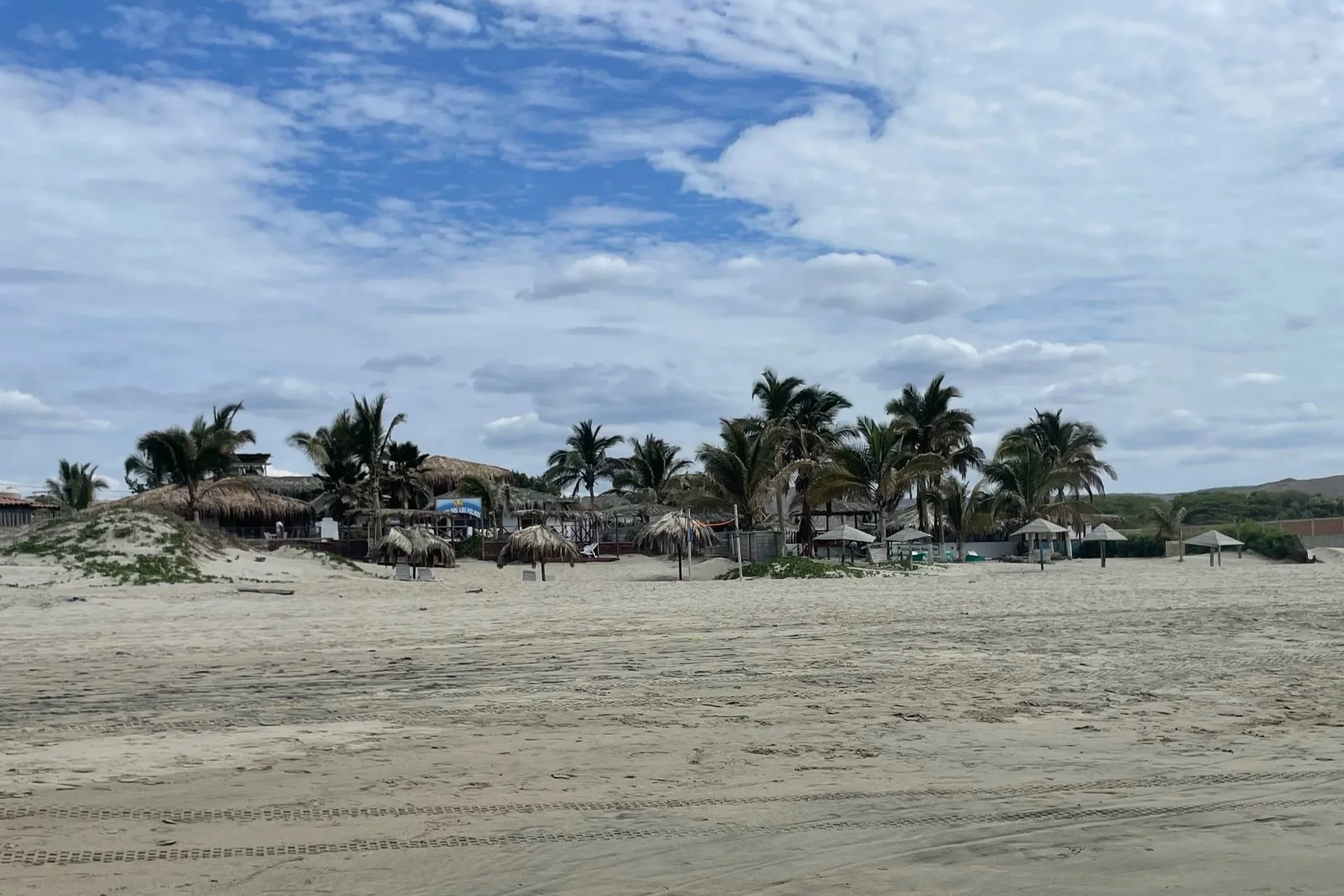
There are two options: stay in the town of Organos or go slightly south of Organos Beach to Punto Valleros. I stayed in at the Hotel Puerto Antiguo in Organos, and while I enjoyed my stay, I regret not checking out the more luxurious options in Punto Valleros!
While Puerto Antiguo was a bit bare-bones, the big draws were its fast Wi-Fi and direct beach access, which made it worth it. Everyone who worked there was also incredibly nice, helpful, and willing to put up with me practicing my awful Spanish with them.
The hotel was a ten-minute walk into town, and the staff assured me it was perfectly safe for me to walk around by myself, but if you don’t feel like walking, you can also take tuk-tuk/moto taxis and get around town pretty quickly for 3-5 soles per ride.
Punto Valleros is more remote, but it has nicer private resorts, bungalows, and hotels on that side of the beach. I used Booking.com, but you can book many of the same options on Airbnb. A great hotel option is Piramide Titi at the top of the cliff with direct beach access and its own surf shop below.
What To Do in Organos
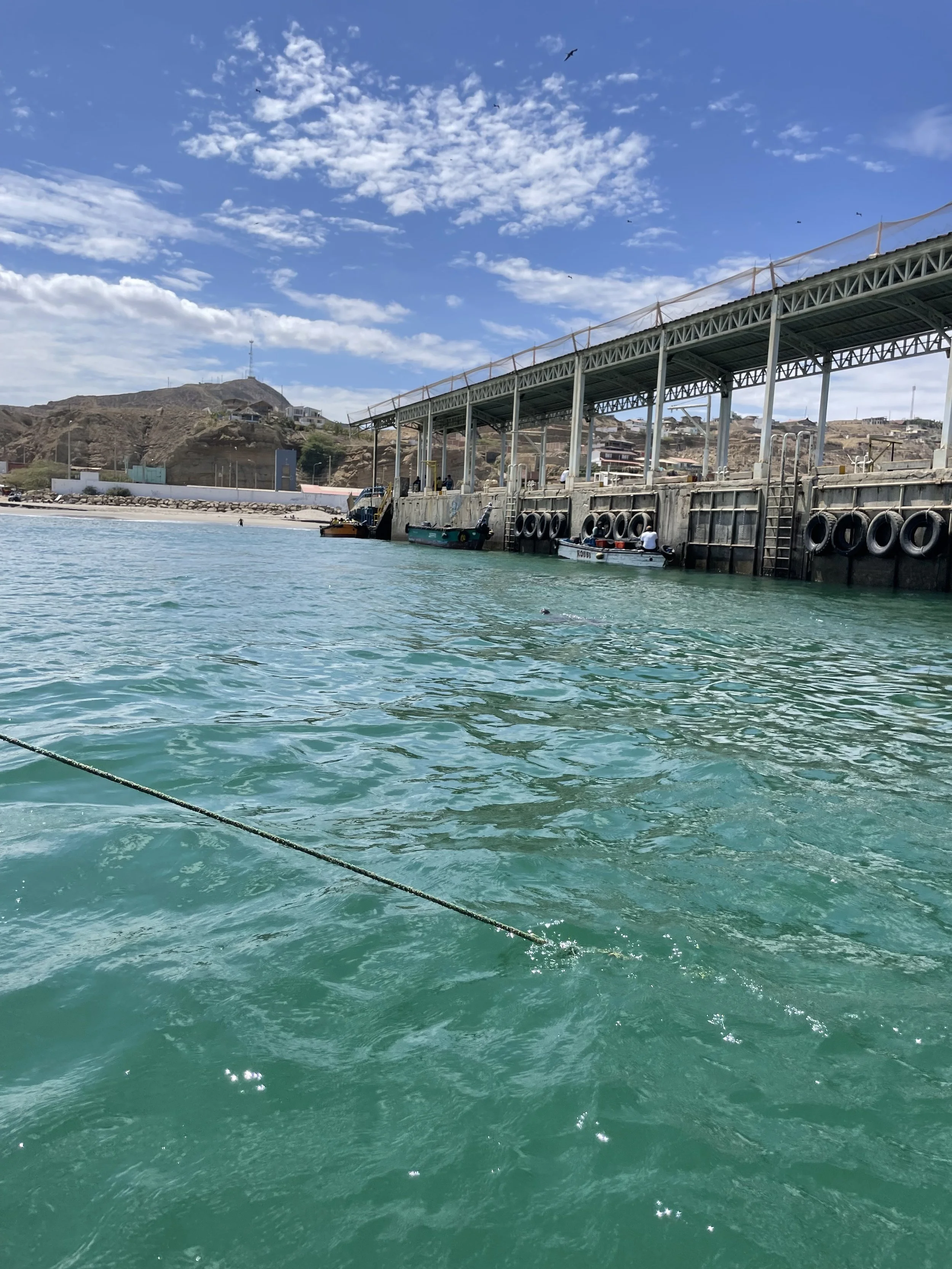
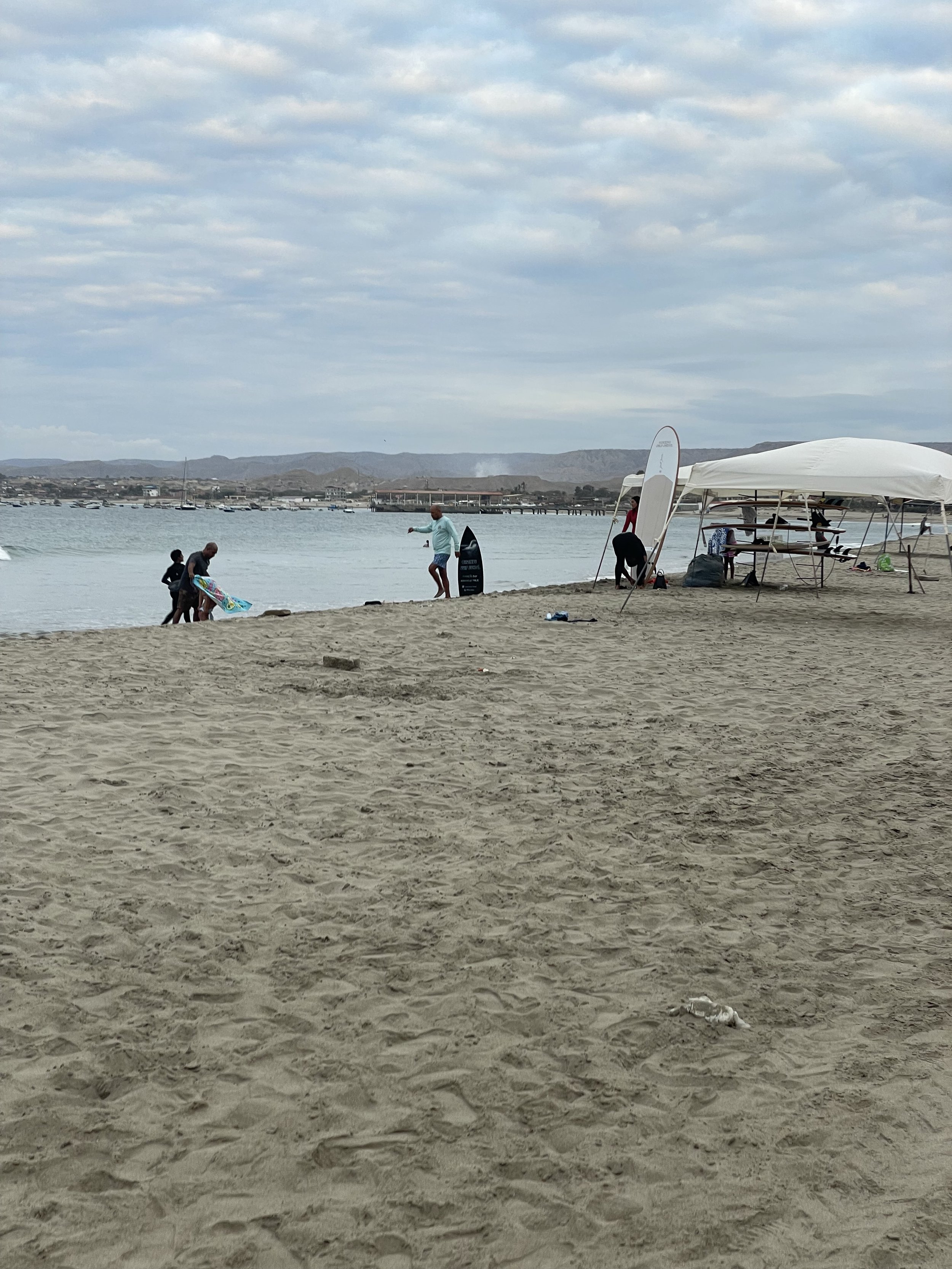
There’s not a lot to do here by design. It has the usual beach-town water sports, but it is famous for two particular things: the green sea turtles who flock to the beach and whale watching.
Swim with the turtles responsibly
Right off the pier in Organos, there are many tours offering the chance to swim with sea turtles. However, most of them stuff as many people as possible onto their boats and bait the turtles to come to them. They allow people to grab the turtles and take selfies with them. The turtles will continue to come to the area, but choosing a responsible tour provider is essential for everyone (you, the wildlife) to have a good experience.
I booked a tour with Caterina at Alagua that focused on a more responsible way to swim with turtles. It’s a private snorkelling tour at the same pier that gets you just as close to the turtles, but without messing with them or their habitat. They are so close that you don’t need food to lure them. And some of them are very friendly! While we were in the water, one turtle took a liking to me and swam circles around me several times. Caterina has spent years studying whales in Chile, Peru, and Ecuador, and is passionate about marine wildlife. We went swimming under the pier to see different crab species that lurk on the sides and wooden columns. The water is chilly, so prepare accordingly! I don’t think a wetsuit is needed, but I wore a long swimming top and was very happy with my choice.
Go whale (and dolphin) watching
When I went in January, the whales had already migrated, but this is a famous spot for whale watching from July until November. In November in particular, you can see the humpback whales’ babies learning how to jump from the shoreline, and occasionally you can spot an orca.
While you don’t even need a tour to see the whales because they get so close to shore, if you want to go farther out, I would recommend booking a tour with Pacifico Adventures for the best experience. They offer group and private tours in Spanish and English with a marine biologist on board, as well as bird watching tours.
Surfing for all levels
Here, the cold currents of the South mix with the warmer currents of the North, so you can get in the water without a wetsuit. The waves here are famous and very beginner-friendly all year round. All of the hotels have a connection to a local surf school, if you want to take lessons or rent a board and get out in the waves.
Get seafood straight from the dock
You can’t get fresher caught than this. You can buy seafood directly from the fishermen at the Organos pier and at the piers of the towns nearby, like Nuro, Cabo Blanco, and Mancora. There’s a fisherman in Nuro who is famous for taking fresh clams and making his own ceviche by adding Tabasco, salt, and lime juice to be consumed right then and there.
Where to Eat
Two currents mix at the beaches of Northern Peru: the cold Humboldt Current from the South and the warm current that flows up to the Galapagos. This means there is bountiful seafood of all kinds, all fished daily and served fresh at the restaurants in town.
Word of warning: Ceviche is considered a lunch dish here, and many places won’t serve it after 2 or 3 pm because it won’t be fresh. If they do serve it, beware. Another thing to consider is the quality of the water used. There are many hole-in-the-wall restaurants (called huariques) here that serve delicious food, but they use tap water in their dishes, and it will probably make you sick unless you have an iron stomach. I got sick after eating at one such place, so I can’t recommend it, even though I really enjoyed my meal there.
Cevicheria Lisette
They serve local delicacies freshly caught and cooked, like their black clam (concha negra) ceviche served with raw red onion, garlic, the local aji pepper, and cilantro, that you can’t pass up. They’re only open until two or three in the afternoon to serve the freshest seafood in their ceviche. Ignore their hours on Google Maps. Very affordable prices and safe for foreigners to eat without getting sick.
Piramide TiTi
You will need to take a motor up to this hotel slash restaurant on the top cliff of Punto Valleros. Normally, restaurants with this kind of scenic view don’t have the best food, but the food is really good here! They have healthy classics like acai bowls and smoothies in the morning, as well as traditional Peruvian criolla plates like lomo saltado, and Peruvian-Italian fusion pastas and pizzas. There are also stairs from the restaurant down to the beach, so I’d recommend this for a sunset dinner and a walk on the beach before or after.
10 Lucas Restaurante
A huarique right off the Plaza de Armas that is safe for locals and tourists with temperamental tummies alike. My favorite is their take on the Peruvian classic trio: ceviche, arroz con mariscos (baked cilantro rice fried with seafood), and jalea (deep fried fish, calamari, and octopus). The portions are large so come hungry.
Amomassa
One night, I decided to take a break from Peruvian food and try one of the other cuisines on offer in town. This all-day cafe is a block from the Plaza de Armas and serves Argentine pastries and coffee in the morning, and pizzas and focaccia at night (plus alfajadores all day!). I had their dried-mushroom thin-crust pizza, sprinkled with oregano, which was perfectly crunchy and salty. All their pizzas come in two sizes: personal or grande. I got the personal, and I couldn’t finish it- I would say it’s slightly larger than an American-sized personal pizza and more like a Neapolitan pizza. One thing I’ve noticed is that portions are quite large in Peru.
La Sazon D’Elihu
When I asked locals for their favorite restaurant, La Sazon d”Elihu came up every single time. Known for their creative use of local seafood, they offer a mix of traditional dishes and more modern options with their own flair.
Check out their board outside for their daily specials, but their preparations of tuna (atun) and octopus (pulpo) are not to be missed! If you go for lunch, their ceviche and tiraditos: raw fish served with chunks of avocado, mango, peppers, and even soy sauce are not to be missed, but their baked fish dishes at dinner, such as their baked tuna served with a pimentel pepper and cheese sauce on a bed of fried, perfectly salted plantains are equally good!